Most people see an eye doctor because of vision problems, but what does it mean when we're informed that a refractive error causes our fuzzy vision?
We can see the world because our eyes bend (refract). Refractive faults, which are optical imperfections that prevent the eye from properly concentrating Light, cause light-blurred vision. Astigmatism, nearsightedness, and farsightedness are the three main refractive defects.
In most cases, refractive defects can be "corrected" using eyeglasses or contact lenses or permanently cured with vision correction surgery.
To concentrate Light onto the retina, where images are created and delivered to the brain for interpretation, the human eye uses a variety of structures and processes. Refraction, which involves bending Light as it travels through the eye's many optical components, is a crucial part of this process. Blurred vision results from refractive errors and deviations in the refraction process. Following a quick explanation of how the eye functions, the most typical categories of refractive errors are listed:
- Light entering the eye: The cornea, the eye's clear front surface, is where Light enters. The cornea is primarily in charge of the eye's focusing ability. The pupil, the black circular opening in the middle of the colorful iris, is where Light travels after passing through the cornea.
- Lens focusing: The lens, located behind the pupil, precisely adjusts the focus of Light on the retina. We can focus on objects at various distances because of accommodation, which causes the lens to alter shape.
- Focusing light on the retina: As it passes through the cornea and lens and is directed toward the retina at the rear of the eye, light is distorted (refracted). Light is converted into electrical signals by the retina, a layer of light-sensitive cells.
- Image transmission and processing: The brain's visual cortex interprets the retina's electrical signals after they have been sent via the optic nerve.
What Is a refractive error?
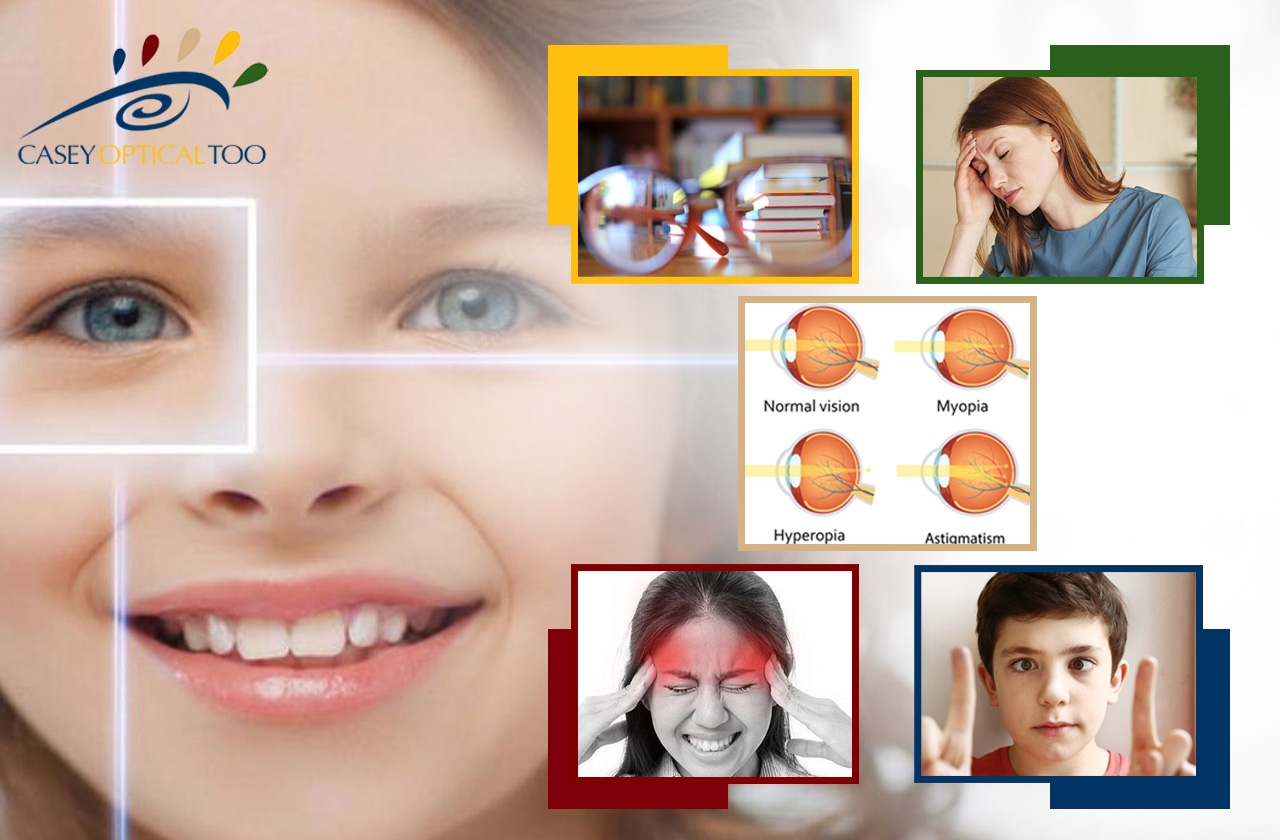
Refractive error results from your eye's shape improperly bending Light, which causes a blurry image. Myopia (nearsightedness), hyperopia (farsightedness), presbyopia (aging-related loss of near vision), and astigmatism are the four primary categories of refractive abnormalities.
What causes refractive errors?
The ability of the eye to refract or concentrate Light sharply on the retina is significantly influenced by three features of its anatomy.
- The curvature of the cornea
- The curvature of the lens inside the eye
- The length of the eye overall
Eye width. Nearsightedness results from Light being concentrated before it reaches the retina when the eye is too long. Light is not focused if the eye is too short when it reaches the retina. Farsightedness, or hyperopia, is a result of this.
Corneal arc of curvature. Astigmatism is a condition where the image is refracted or focused irregularly because the cornea is not perfectly spherical. With or without astigmatism, a person can be nearsighted, farsighted, or both.
The lens's curve Nearsightedness results from the lens's too-steep curvature relative to the cornea's curvature and the length of the eye. Farsightedness occurs when the lens is too flat.
Flaws in how light rays are refracted as they pass through the eye's optical system also contribute to more obfuscated vision issues.
What are the symptoms of a refractive error?
Your vision will get worse if you have any refractive problems. In addition to having vision problems, you may also experience the following symptoms:
- Blurry vision, whether up close, far away, or both.
- Diaphoresis (diplopia).
- Headaches.
- Squinting.
- Strained eyes.
- Eye discomfort.
Children may occasionally not be aware that their vision is deteriorating. You should check your child for a refractive problem if they have trouble focusing or their academic performance suddenly declines. If you observe any changes in your child's eyes, vision, or behavior, make an appointment with your physician or an eye care professional.
Am I susceptible to refractive mistakes?
Anyone can develop refractive problems, but if you have relatives who wear glasses or contact lenses, your risk is increased.
Most refractive defects, like nearsightedness, typically manifest in early life. Adults 45 and older frequently get presbyopia.
Ask your doctor how frequently you should have your eyes tested and discuss your risk for refractive problems.
Common Types of Refractive Errors
-
Myopia (nearsightedness): When the cornea is too steep or the eyeball is too long, Light is focused in front of the retina rather than directly on it. As a result, local objects are easier to see clearly, while distant objects appear hazy.
- Hyperopia (Farsightedness): The reverse of myopia is hyperopia or farsightedness. Light is focused behind the retina when this happens because the eyeball is too short or the cornea is too flat. Near vision is typically worse than distance vision in those with hyperopia.
- Astigmatism: An unevenly shaped cornea or lens causes astigmatism, preventing light rays from converging to a single point on the retina. Instead, they create several focus points, which cause vision to become distorted or blurry at all distances.
- Presbyopia: Presbyopia is an aging-related disorder that makes it difficult for the eyes to focus on up-close objects. As we age, the lens loses flexibility, making it more challenging to accommodate or concentrate on close-up objects.
Glasses, contacts, or refractive procedures like LASIK, which alter the cornea to concentrate Light on the retina better, can all be used to correct refractive problems. An optometrist or ophthalmologist must perform an eye exam to diagnose and recommend the best corrective measures for refractive problems.
Tests and diagnosis
An eye doctor can spot a refractive error during a routine eye exam. During testing, the patient is often asked to read a vision chart while wearing several lenses. Specialized imaging or other testing is infrequently necessary.
What's the treatment for refractive errors?
Eye physicians can surgically treat refractive faults with glasses, contact lenses, or both.
Contacts. Your eyes' surface is covered by contact lenses that correct refractive errors. Your ophthalmologist will fit you for the proper lenses and demonstrate how to care for and wear them securely.
Surgery. During some operations, such as laser eye surgery, the shape of your cornea can be changed to treat refractive issues. You can get advice from your eye doctor regarding whether surgery is necessary.
With your eye doctor, go over your alternatives. Keep in mind this advice:
- frequently schedule eye checkups with your physician
- If your vision deteriorates or you experience issues with your glasses or contact lenses, let your doctor know immediately.
- Refractive errors can run in families, so encourage family members to get examined.
Diagnosis for children
Since visual problems can hinder a child's intellectual development, early detection of refractive abnormalities is especially important for kids. The development of amblyopia (lazy eye) is another possibility if a child's refractive abnormalities are not promptly treated. Younger children may require a retinoscopy, a test that looks at how Light reflects off the retina, to determine how well they can see if normal eye charts cannot be used to determine their vision. This test calls for eyedrops to dilate the pupils.
Conclusion
Refractive errors are frequent visual issues brought on by the eye's failure to concentrate Light properly on the retina. Myopia, hyperopia, astigmatism, and presbyopia are the four main forms. Fortunately, these disorders can be successfully treated with eyeglasses, contacts, or refractive surgery, resulting in better eyesight and a higher standard of living. For the early detection and effective management of refractive problems, routine eye exams are essential.
Discover exceptional vision care and a warm, welcoming environment at Clear Perspective EyeCare, LLC. Our commitment to high-quality vision care and comprehensive services ensures all your eye care needs are met. Schedule your appointment today and experience the best in optometry services in Albuquerque, New Mexico. Your vision matters to us.
Categories
Recent Posts
- Back-to-School Eye Exam Checklist: Set Your Child Up for Success This School Year
- What Makes Contact Lenses More Comfortable? | Clear Perspective EyeCare
- Why Do Dry Eyes Get Worse During Summer?
- The Importance of Regular Eye Exams: More Than Just Clear Vision
- Lucyd Smart Frames: The Future of Smart Glasses?
Archive
- July 2026
- June 2026
- April 2026
- March 2026
- February 2026
- January 2026
- December 2025
- November 2025
- October 2025
- September 2025
- August 2025
- July 2025
- June 2025
- May 2025
- April 2025
- August 2024
- July 2024
- June 2024
- May 2024
- April 2024
- March 2024
- February 2024
- January 2024
- December 2023
- November 2023
- October 2023
- September 2023
- August 2023
- July 2023
- June 2023
- May 2023
- April 2023
- March 2023
- February 2023
- February 2021
- January 2021
- December 2020