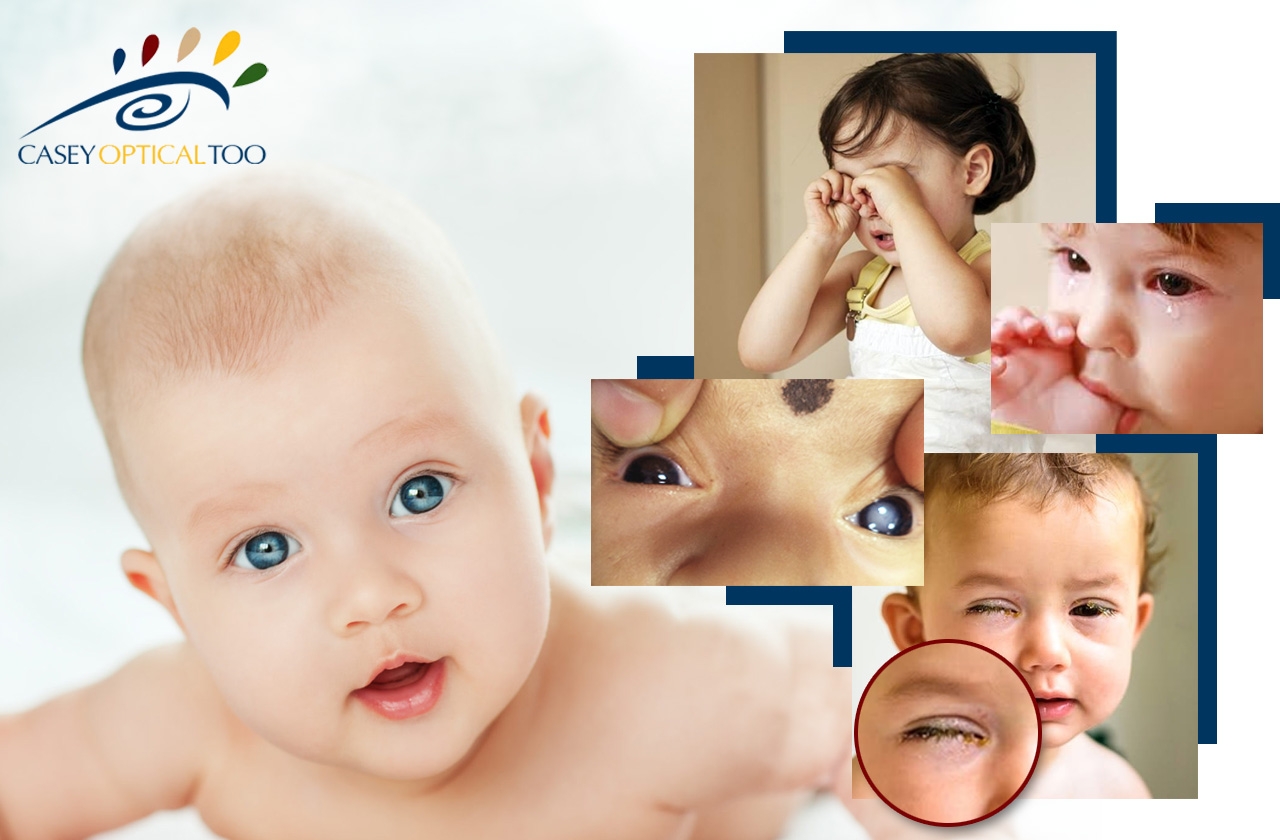
A baby's eyes develop quickly, starting at birth with the ability to sense light and motion, progressing to the ability to discriminate between colours and focus on small objects around three to four months of age, and then developing a more accurate ability to judge distances and depths about a year.
As your child develops and learns new skills, the eyes don't slow down in their evolution from that point on. Instead, they keep changing quickly.
You could wonder why and strive assiduously to figure out what's happening in your youngster exhibits indifference in learning activities that appear fun or lag with anticipated physical, cognitive, or social development milestones.
Your child's vision may be to blame for these hiccups, although this is frequently not the first thing that comes to mind. Understanding the warning symptoms of vision issues in infants, toddlers, or kids can help you concentrate your efforts on providing and securing for them the special assistance their eyes require to grow.
What are the indicators of a vision issue?
Babies up to 1 year of age:
- Babies older than three months should be able to follow or track an object with their eyes as it moves across their field of vision, such as a toy or a ball. Inform your child's doctor if your infant is still having trouble maintaining eye contact or appears to be blind at this point.
- Most babies' eyes occasionally seem misaligned (strabismus) before four months. After 4 months, however, regular inward crossing or outward drifting is typically atypical. Inform the doctor of your child's condition if any of these exist.
Kindergarten age:
It's crucial to examine your child's vision. For example, a lazy eye (amblyopia) may not show any symptoms until a visual impairment develops, and your child may not even be aware that something is wrong. Inform the doctor of your child's misalignment as soon as it occurs.
There are several indicators that your child may have vision issues.
- The newborn's eye never opens.
- Their eyes alternately move and remain stationary.
- Your baby frequently squints.
- The eyes of your infant appear light-sensitive.
- When not tired, your infant rubs his eyes.
- There is usually a white patch or pupils when your infant is photographed rather than red eyes.
- Your infant's eye(s) are drooping.
- The eyelids of your infant are drooping.
- Your infant has a larger eye than the other.
- Your infant has one pupil that is bigger than the other.
- The pupil of your baby's eye is clouded with a white, greyish-white, or yellow substance.
- Other variations from how your baby's eyes typically appear are apparent. Once your baby is a month old, lights, mobiles, and other entertainment no longer hold your baby's interest.
After your baby is three months of age, alert your baby's doctor if you notice any of the following:
- An object moving from side to side in front of your baby's face is not followed or tracked by his eyes.
- The eyes of your infant appear to bounce or wiggle back and forth.
- Your infant's eyes turn sharply in or out and remain that way.
- Your infant always appears to incline his head when seeing objects.
Causes of vision problems
As a congenital condition, vision impairment in newborns is possible. As a result of illness, trauma, or a medical condition, it may potentially take place later. These can be the reasons behind the delayed development of vision.
Congenital conditions
Congenital causes mostly result from:
- Genetic diseases or developmental abnormalities: Babies' eyes may develop atypically during pregnancy or owing to developmental issues. Retinitis pigmentosa, albinism, and cataracts are a few examples.
- Alcohol: Drinking too much alcohol while pregnant can lead to foetal alcohol syndrome, leading to developmental issues like blindness, visual impairment, droopy eyelids, or ptosis nystagmus, which results in abnormal or uncontrollable changes in the eyelids.
- Infection: This can happen during pregnancy and includes TORCH, which causes inflammation and abnormalities of the eyes: toxoplasmosis, various agents, rubella, CMV, and herpes.
- Drugs: Pregnant women who use certain drugs, such as cocaine and seizure medications, risk their unborn children developing ocular malformations. In-utero substance exposure increases the likelihood that a newborn may have eye abnormalities like strabismus, binocular movement disorders, and ocular muscle disorders, according to a study published in 2020.
Other causes
A variety of factors can lead to acquired diseases in infants as well.
- Retinopathy of prematurity (ROP) is an eye condition that affects very preterm infants and is brought on by abnormal blood vessel formation in the retina. Low birth weight and gestational age are the most significant risk factors for developing severe ROP. It might go better on its own or need surgery.
- Any conjunctivitis that manifests within the first 28 days of an infant's life is called ophthalmia neonatorum. Infections with bacteria or viruses are the most frequent causes.
- Amblyopia, often known as lazy eye, is a condition in which one or both eyes do not adequately grow during infancy. Strabismus, refractive problems, cataracts, and ptosis are other causes. Amblyopia is the most prevalent cause of visual loss in children, affecting about 3 out of every 100 children (Source: Trusted Source).
- When the eye muscles cannot cooperate, strabismus develops. It may run in families or be brought on by conditions including spina bifida, cerebral palsy, retinoblastoma, and premature birth. Some people may be born with it as well.
- The brain may be damaged fatally as a result of this. Retinal haemorrhages, a disorder that can result in irreversible vision loss, are present in around 85%Trusted Source of these instances.
Medications for this syndrome
The therapies, which may involve using eye drops, donning glasses, getting Botox injections, or having surgery, will depend on the underlying cause of the eyesight problem.
For instance, doctors may advise wearing eyeglasses, surgery to correct the eyes, eye exercises, or patching the stronger eye to boost the strength in the weaker eye to treat strabismus.
Children with significant eyesight loss can receive help from a variety of specialists. These consist of the following:
- orthoptists
- orientation and mobility specialists
- occupational therapists
- counsellors
- special education teachers
Parents and other carers can try age-appropriate activities at home to support their child's vision. Although not critical for growth, these activities are still beneficial for babies.
0–4 months
Activities to support vision at 0–4 months include:
- Repositioning the child in their cot and placing toys 8 to 12 inches away from them where they can see them
- When eye-hand coordination develops, newborns begin grabbing moving objects with their hands and monitoring them with their gaze.
5–8 months
Activities to support vision at 5-8 months include:
- Giving the infant enough floor time to play and explore, positioning toys and objects that they can grip and kick, and providing toys that they can handle
9–12 months
Activities to support vision at 9–12 months include:
- To help kids connect words to things and actions, name them.
- encouraging crawling, cruising, and other active exploration
- playing activities that require visual memory, such as hide-and-seek
1–2 years
Activities to support vision at 1-2 years old include:
- To assist the youngster in establishing visual tracking, roll a ball around.
- Playing with various-sized and shaped blocks and balls, telling or reading tales
Preventions
- If you suspect your baby may have a vision problem, consult a paediatrician or an eye doctor. They can perform an eye exam to diagnose any issues and recommend a course of treatment, which may include glasses or vision therapy.
- If glasses are recommended, it is important to ensure they fit properly and are comfortable for your baby.
- Follow up with regular appointments to monitor your baby's vision and make any necessary adjustments to their treatment plan.
Conclusion
Infant vision problems are not uncommon and may require glasses to correct. Causes of infant vision problems include strabismus, refractive errors, and amblyopia. These issues can lead to permanent vision loss or developmental delays if left untreated. To address infant vision problems, it is important to consult with a paediatrician or eye doctor and follow their recommended course of treatment, which may include glasses or vision therapy.
Discover exceptional vision care and a warm, welcoming environment at Clear Perspective EyeCare, LLC. Our commitment to high-quality vision care and comprehensive services ensures all your eye care needs are met. Schedule your appointment today and experience the best in optometry services in Albuquerque, New Mexico. Your vision matters to us.
Categories
Recent Posts
- Back-to-School Eye Exam Checklist: Set Your Child Up for Success This School Year
- What Makes Contact Lenses More Comfortable? | Clear Perspective EyeCare
- Why Do Dry Eyes Get Worse During Summer?
- The Importance of Regular Eye Exams: More Than Just Clear Vision
- Lucyd Smart Frames: The Future of Smart Glasses?
Archive
- July 2026
- June 2026
- April 2026
- March 2026
- February 2026
- January 2026
- December 2025
- November 2025
- October 2025
- September 2025
- August 2025
- July 2025
- June 2025
- May 2025
- April 2025
- August 2024
- July 2024
- June 2024
- May 2024
- April 2024
- March 2024
- February 2024
- January 2024
- December 2023
- November 2023
- October 2023
- September 2023
- August 2023
- July 2023
- June 2023
- May 2023
- April 2023
- March 2023
- February 2023
- February 2021
- January 2021
- December 2020