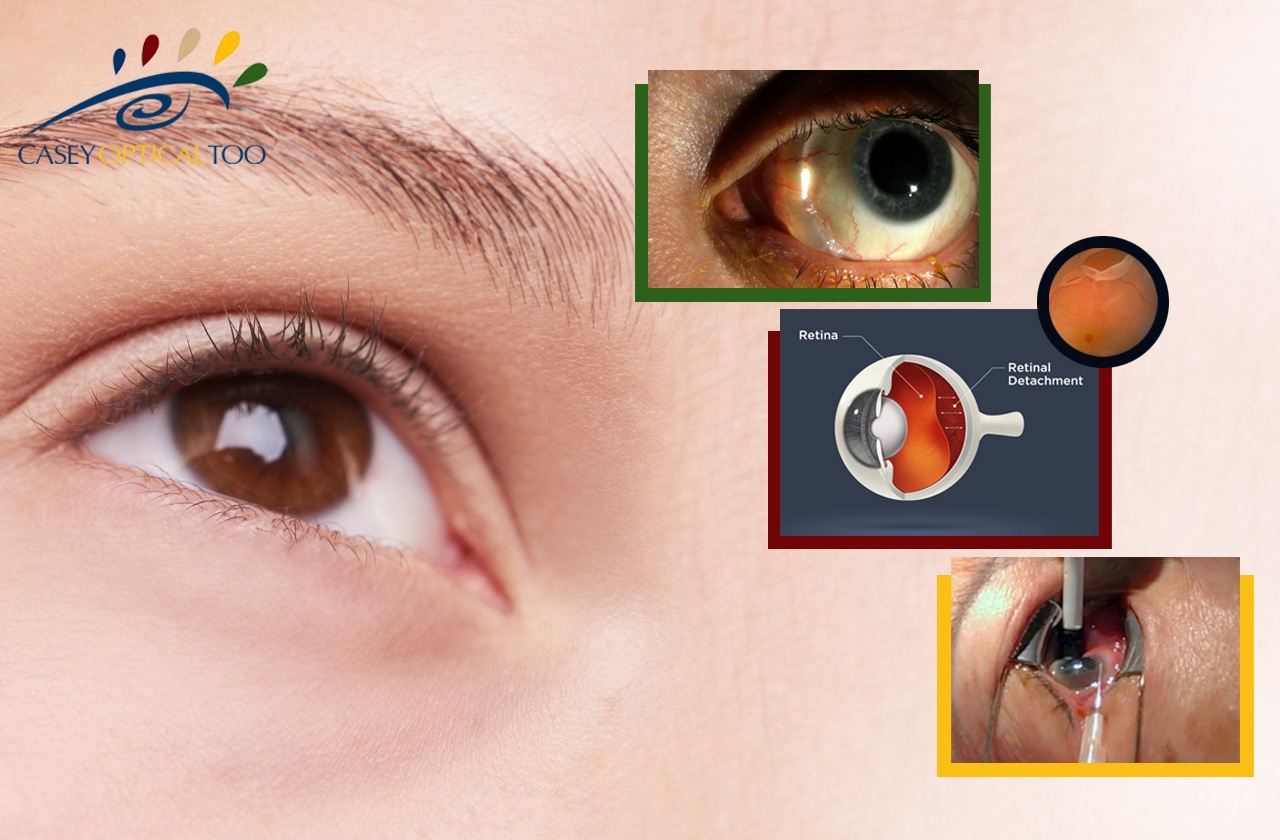
In an emergency scenario known as retinal detachment, a thin layer of tissue (the retina) in the back of the eye slips away from its normal position.
The retinal cells are separated from the layer of blood vessels that feed and oxygenate the eye via retinal detachment. You risk losing vision in the affected eye permanently if the more extended retinal detachment is left untreated.
Reduced vision, the abrupt emergence of floaters, and light flashes are potential warning symptoms of retinal detachment. Your vision may be saved if you immediately contact an ophthalmologist.
What is retinal detachment?
A dangerous but painless disorder of the eyes is retinal detachment. The layer of tissue at the back of your eye, the retina, separates from the tissues that support it, which is how it occurs. Blindness may result from a detached retina, which impairs vision.
The retina detects light and communicates this information to your brain. Your retina stops receiving blood when it separates from the tissues supporting it. Your retina receives nutrition and oxygen from the blood arteries in those tissues.
Immediately after noticing:
- More significant than average eye floaters.
- Light-up moments
- a shadow that you can see.
These might indicate a detached retina. Stop waiting to see if you experience pain. To begin therapy as quickly as possible, your doctor will want to.
Symptoms and indications of a detached retina
Although there are frequent indications before your retina becomes detached, there is no discomfort associated with retinal detachment. Primary signs comprise:
- Fuzzy vision
- Partial vision loss with a dark shadowing look that feels like a curtain has been drawn across your field of vision
- Seeing numerous floaters, which are tiny pieces of debris that appear as black specks or strings floating before your eye, as well as unexpected light flashes in one or both eyes
Retinal detachment symptoms frequently appear suddenly. You run the chance of more of the retina detaching, which could raise your risk of losing your vision if the problem isn't resolved immediately.
What causes a retinal detachment?
A detached retina can result from an injury to the face or eye.
A retinal detachment can also result from severe nearsightedness. It is because very nearsighted individuals frequently have eyeballs that are longer than average, thinner retinas, and more prone to detaching.
A detached retina might sporadically happen following LASIK surgery in highly nearsighted patients. Cataract surgery, malignancies, ocular conditions, and systemic illnesses such as diabetes and sickle cell disease can also bring on retinal detachments.
Retinal detachment from its support network may result from new blood vessels sprouting beneath the retina, which can happen in conditions like diabetic retinopathy.
Types of detached retina
Three different kinds of detached retinas exist:
-
Retinal rhegmatogenous detachment: A retinal crack, tear, or hole is what this is. This opening enables fluid to go from the vitreous cavity into the region that separates the sensory retina from the retinal pigment epithelium. The layer of pigmented cells immediately outside the neurosensory retina is known as the pigment epithelium.
- Retinal detachment secondary: This condition, also known as exudative or serous retinal detachment, develops when fluid accumulates beneath the retina due to inflammation, blood vessel issues, or damage. No rips, breaks, or holes exist.
- Detachment of the tractional retina: It occurs when the fibrovascular tissue pulls the sensory retina away from the retinal pigment epithelium due to an injury, inflammation, or the development of new blood vessels.
Do I have a retinal detachment risk?
Although anyone can have a retinal detachment, some people are more vulnerable. You are more vulnerable if
- You or a family member has previously experienced a retinal detachment.
- You've suffered severe eye damage.
- You've undergone eye surgery, possibly to remove cataracts.
- You may also be more vulnerable due to other eye issues, such as:
- Diabetes-related retinopathy, a disorder that affects the retina's blood vessels,
- Myopia (extreme nearsightedness), particularly a severe variety known as degenerative myopia
- When the gel-like fluid in the centre of the eye pulls away from the retina, it is said to have posterior vitreous detachment.
Other eye conditions including lattice degeneration (retinal thinning) and retinoschisis (when the retina divides into two layers)
Speak with your eye doctor if you are worried about your risk for retinal detachment.
Treatment for retinal detachment
One or more of these techniques may be used during your treatment:
- Freezing or a laser (thermal). If a rip is detected in time, both techniques can mend it. They frequently take place in the doctor's office.
- Pneumatic retinal surgery. It is effective for small, simple tears that may be repaired. Your physician injects a microscopic gas bubble into the vitreous gel. It closes the tear by pressing against the upper portion of your retina. To retain the bubble in the proper location, you must maintain a specific head position for several days.
- Buckling of the scleral. Your doctor bound the sclera, or white of your eye, with a silicone band (buckle). The tear or separation is pushed toward till it heals. This band is permanently affixed and undetectable.
- Vitrectomy. Large tears or detachments are fixed during surgery. After removing the vitreous gel, your doctor replaces it with a gas or oil bubble. Additionally, you might have to hold your head still for a while after a vitrectomy.
Most retinal surgeries are successful between 80% and 90% of the time. However, you might require more than one. Your vision might not come back for several months. In more extreme cases, some people don't fully recover their vision.
An injured retina won't mend by itself. The sooner you receive medical attention, the better your chances are of preserving your vision.
Preventing retinal detachment
There is typically no method to stop retinal detachment. However, you can take precautions to try to prevent retinal detachment resulting from trauma or illness. These may consist of:
- Using safety glasses while engaging in sports,
- Performing any heavy lifting or using tools to manage your blood sugar if you have diabetes,
- Scheduling routine dilated eye exams.
Additionally, it's critical to be aware of the indicators of retinal detachment and to see your doctor immediately if any appear.
Conclusion
A detached retina results when the thin layer of tissue in the back of the eye separates from the supporting tissue. It is a critical condition that must be treated immediately if permanent vision loss is to be avoided. Age, eye diseases, trauma, family history, and other underlying issues are common reasons. Floaters, light flashes, shadows or a curtain-like look, impaired vision, and visual loss are possible symptoms. Depending on the extent and location of the detachment, several treatment techniques are available, including laser surgery, cryopexy, scleral buckles, vitrectomies, and pneumatic retinopexy. Prompt diagnosis and treatment are essential for a successful outcome and preserving vision.
Clear Perspective EyeCare, LLC is a pillar of high-quality vision care in Albuquerque, NM. Our comprehensive services ensure that all your eye care needs are met excellently. Don't wait any longer to experience the warmth and professionalism of our optometrists—schedule your appointment today and discover personalized care that prioritizes your vision and well-being.
Categories
Recent Posts
- Back-to-School Eye Exam Checklist: Set Your Child Up for Success This School Year
- What Makes Contact Lenses More Comfortable? | Clear Perspective EyeCare
- Why Do Dry Eyes Get Worse During Summer?
- The Importance of Regular Eye Exams: More Than Just Clear Vision
- Lucyd Smart Frames: The Future of Smart Glasses?
Archive
- July 2026
- June 2026
- April 2026
- March 2026
- February 2026
- January 2026
- December 2025
- November 2025
- October 2025
- September 2025
- August 2025
- July 2025
- June 2025
- May 2025
- April 2025
- August 2024
- July 2024
- June 2024
- May 2024
- April 2024
- March 2024
- February 2024
- January 2024
- December 2023
- November 2023
- October 2023
- September 2023
- August 2023
- July 2023
- June 2023
- May 2023
- April 2023
- March 2023
- February 2023
- February 2021
- January 2021
- December 2020